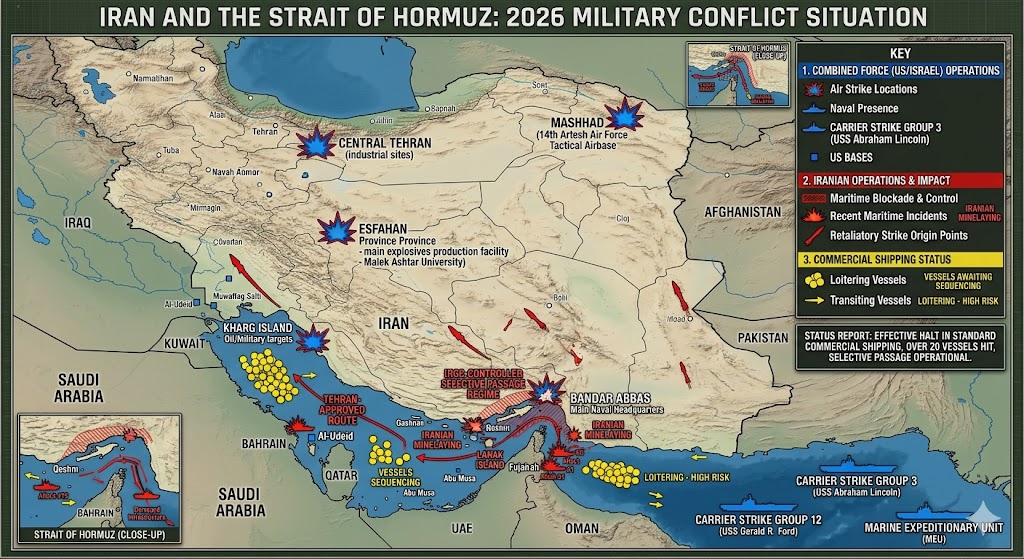


It’s not the headlines. It’s how the shock travels.
When geopolitical tensions flare up, markets often move before anyone really knows where things will end up. That can feel unsettling, especially when the news flow is intense. But markets usually are not trying to guess the exact political outcome. They are trying to price the ways a conflict could flow through to the economy, such as growth, inflation, and company earnings.
In this situation, the main pathway is energy. More specifically, it is how oil and gas move around the world. For New Zealand, that matters because we are a long way from the Middle East but we still pay global prices for fuel, and we import most of what we use. When global energy markets get disrupted, it tends to show up here quickly.
Why the Strait of Hormuz matters
The Strait of Hormuz is one of the world’s most important energy chokepoints. Around one fifth of global oil consumption moves through this narrow corridor, and a meaningful share of global LNG also passes through, especially from Qatar.
For investors, two practical points stand out:
- Alternatives are limited. If shipping through the strait is disrupted, there are some bypass options like pipelines, but they are only partial. They cannot fully replace normal shipping volumes.
- Asia is most exposed. A large share of oil and LNG moving through Hormuz goes to Asian markets.
Why does that matter for New Zealand? Because Asia plays a big role in setting marginal energy demand and pricing. If buyers in Asia scramble for supply, global prices can lift. New Zealand then feels that through higher wholesale fuel costs, even if we are not directly involved in the conflict.
The underappreciated driver: insurance and shipping behaviour
Energy flows do not need a physical blockade to slow down. Sometimes the disruption happens through behaviour. If insurers raise premiums, tighten terms, or withdraw cover, shipping can become uneconomic or too risky. Tankers may reroute, delay, or pause.
That kind of friction can tighten supply in practice, even before there is a clearly measurable shortage. It is one reason oil markets can react sharply to rising tension. Markets often price the risk of disruption before disruption becomes visible in the data.
For New Zealand, shipping risk matters in two ways. First, it can push up global fuel prices. Second, higher shipping and risk costs can lift the landed cost of many imported goods over time, which can add to local inflation pressures.
Why oil shocks show up everywhere (even if a country “doesn’t buy oil from there”)
Oil is globally priced. Even if a country imports little fuel directly from the Gulf, a rise in the global oil price tends to flow through quickly. Transport costs rise, manufacturing inputs get more expensive, and household fuel bills climb. Over time, that can feed into broader inflation and growth expectations.
In New Zealand, the pass through can be very noticeable because fuel prices are high visibility and affect a wide slice of the economy. When petrol and diesel rise, households feel it at the pump, but businesses feel it in freight, logistics, agriculture, and the cost of getting goods to market.
It can also complicate the interest rate outlook. If inflation is being pushed up by energy costs, the Reserve Bank may be more cautious about easing policy quickly, even if the economy is softening. That is one reason oil shocks can affect bond yields, mortgage rates, and market sentiment.
What markets are really trying to work out
From an investment perspective, the big question is not whether tensions rise or fall on any single day. It is whether this stays:
- A contained shock, volatile but short lived, or
- A sustained disruption that changes the macro backdrop, with inflation pressure lasting longer, interest rates staying higher for longer, and global growth weakening.
For New Zealand investors, the “contained versus sustained” question also links to the NZ dollar. In risk off periods the NZD can weaken, and that can amplify fuel prices locally because oil is priced internationally. A weaker currency can help exporters, but it often makes imported inflation feel worse for households.
What this means for investors (and why staying calm matters)
When events like this hit the news, the temptation is to feel like we need to act quickly. In reality, the biggest investment mistakes often come from reacting to headlines at the most emotional point in the cycle.
It helps to remember two things.
First, markets are very good at pricing risk quickly. By the time something feels “obvious” in the news, a lot of the adjustment has already happened in prices. That is why sudden moves can feel dramatic, but they often reflect a rapid repricing of uncertainty rather than a clear change in long term fundamentals.
Second, diversified portfolios are built for exactly these moments. A mix of global shares, quality fixed income, and sensible currency exposure is designed to absorb shocks without needing constant intervention. Some parts of a portfolio may fall when risk rises, but others can hold up better.
So the practical response is not to try to outguess the next headline. It is to stay focused on time horizon and goals, and to avoid making big changes while uncertainty is highest. If volatility persists, the disciplined approach is usually the same as always. Rebalance where appropriate, keep risk aligned to the plan, and make sure cash needs for the next one to three years are covered so the growth assets can do their job over time.
Closing thought
Geopolitical events are emotionally charged, and the headlines can be relentless. But markets tend to respond to the underlying plumbing: energy prices, inflation expectations, currency moves, and how policy makers react. Keeping the focus on what we can control, namely diversification, risk settings, and time horizon, helps cut through noise and keeps decisions grounded in fundamentals rather than fear.